

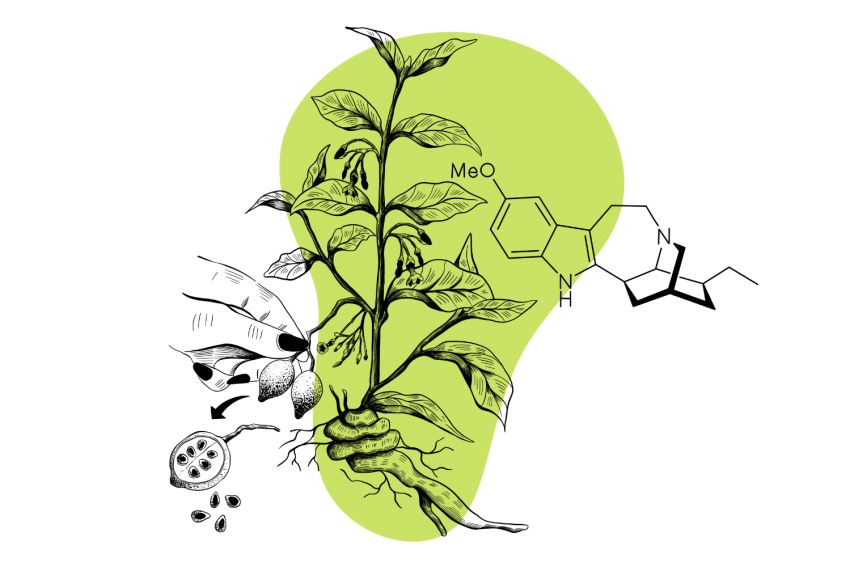
Ibogaine A Powerful Anti-Addictive Psychedelic
It’s difficult to have a conversation around the use of psychedelics in addiction treatment without bringing up iboga — a traditional plant medicine from Central Africa. This plant forces you to confront your deepest, darkest traumas and suppressed thoughts, bringing them to the surface where they can be integrated and healed. But this doesn’t come without its fair share of risk. Here, we’ll explore iboga, and its active ingredient, ibogaine, in more detail. You’ll learn how it’s used, how it works, and what you need to know before seeking treatment.
What is Ibogaine?
Ibogaine is a psychedelic alkaloid found in several species of plants in the Apocynaceae family. The most common species used is Tabernanthe iboga — a tropical shrub from the Congo. Other species can also be used to obtain this alkaloid, including Voacanga africana and Tabernaemontana undulata. It can also be synthesized from its precursor compound, voacangine. Ibogaine has a long history of use as an appetite suppressant and spiritual medicine. It was first discovered by the Pygmy tribes of Central Africa, who used the plant for spiritual and divination purposes. It wasn’t until recently that ibogaine first made its debut as an anti-addiction medicine. This is now the most common application for the plant today. Unfortunately, ibogaine brings some health risks that make it a less desirable psychedelic for addiction treatment than other substances like ayahuasca, 5-MeO-DMT, and ketamine — all of which have a much better safety profile.
Ibogaine: Specs & Technical Details
| Active Ingredient | Ibogaine |
| Level of Risk | Moderate–High |
| Most Common Side-Effects | Arrhythmias, nausea/vomiting |
| Duration of Effects | 8–24 hours |
| Legality | Illegal in Uganda & most countries (few exceptions) |
What Does Ibogaine Feel Like?
Ibogaine is a powerful psychedelic, dissociative, and oneirogenic (dream-inducing). There are two different ways of using ibogaine — the raw root bark of the iboga plant and concentrated ibogaine. The iboga root contains 11 other alkaloids — many of which are thought to be biologically active on their own. The effects of iboga root last longer and are much more likely to induce a spiritual experience than concentrated ibogaine. With that said, both the iboga plant and ibogaine experience can be broken down into two phases — the visionary stage and the introspection phase.
1. The Visionary Stage
After taking ibogaine, you’ll need to wait between one and two hours before the effects start to kick in. The experience begins gradually but intensifies over time. Users will start to experience visual distortions and geometric patterns that become more intense every minute. Within about 30 minutes after the first onset of hallucinations, most users find themselves in a dreamlike state — this is the oneirogenic aspect of the experience. While you’re in the dream, the landscape could be your current environment or something entirely different. This dream state is thought to dislodge unconscious thoughts and emotions in the form of a dream. The difference is that during this “waking dream,” you’re fully aware of what’s going on and able to retain the memory of it when the experience is over. This effect is what makes ibogaine so powerful for facing trauma and internal struggles head-on. It forces you to face your shadow and explore the impacts traumatic events have had, or continue to have on your life. This stage can be very uncomfortable. You may endure an ego-death experience, forcing you to explore parts of your psyche you normally try to suppress.
2. The Introspection Phase
Once the visionary stage starts to wear off, the introspective portion of the journey begins. This can happen anywhere from 4 to 8 hours after first taking ibogaine, or 10–24 hours if using the raw iboga plant. During this stage, the mind processes the experience you just went through. Users are often filled with emotion, both good and bad, as they continue to process dislodged traumas and ego disillusionment. This phase can last a long time. Some users report a maintained, semi-lucid, introspective state for up to 20 hours after taking ibogaine or 72 hours with the iboga plant. During this stage, it’s important to be patient with yourself and others and ensure you have a safe and quiet space to sit with your thoughts alone. Some people find it helps to journal during this phase; others prefer to sit alone with their thoughts. Even when this stage is over, users report having a higher capacity for introspection and self-exploration. Interestingly, users also report they need less sleep for up to two weeks after the session. How Long Does Ibogaine Last? The acute effects of concentrated ibogaine can last up to 8 hours, with an additional 10 hours of mild lucidity and deep introspection. Iboga root bark lasts much longer — it’s not uncommon for the visionary stage to last a full 24 hours and the introspective stage an additional 48 hours. Users should allow at least three days for an ibogaine session. One day beforehand to prepare (at least), one full day (24 hours) for the experience, and an additional day to recover and relax.
What’s the Dose of Ibogaine?
The dose of the root bark of the iboga plant can vary a lot. First of all, everyone’s physiology is unique, and several variables can alter the impact iboga alkaloids have on the body. Secondly, the iboga root itself can vary. The alkaloid content may differ in one plant from another depending on the growing conditions, the region the plant was grown, and how it was harvested, stored, and prepared. In general, the dose of iboga root is between 5 to 100 grams. This is a good example of why it’s so important to only use iboga under the care and supervision of an experienced practitioner who is intimately familiar with the dose of a particular sample of iboga. The dose of ibogaine HCL is a little bit different. This concentrated alkaloid is much more consistent because there’s far less variability of the alkaloid itself — however, the variability of the individual still stands. The effective dosage range used in most clinical studies ranges from about 10 to 55 mg per kg of bodyweight.
Microdosing Ibogaine
Microdosing is the practice of taking sub-perceptual doses of a psychoactive substance. This dose is usually many times below the threshold dose — which is the minimum dose required to produce noticeable psychoactive effects. There are people who microdose ibogaine and claim to have experienced a wide variety of benefits as a result. However, most iboga practitioners, both modern and traditional, don’t recommend microdosing this substance. Only those with a lot of experience using the plant and undergo regular medical visits to assess potential underlying risk (especially around cardiac function) should even consider microdosing iboga. With that said, for the sake of thoroughness, the most common method people use iboga in microdoses is to prepare a tincture of the dried root bark of the Tabernanthe iboga shrub. The target dose is around 1g equivalent of a tincture. The amount of tincture you need to reach this dose depends on how concentrated the tincture is.
Is Ibogaine Legal?
As with any psychedelic substance, the legal status changes dramatically from one country to the next. While there are clear health benefits associated with ibogaine, there’s also some risk. Some countries completely ban the substance, others maintain it as a legal and useful medicine, and others keep ibogaine therapy open for research but restricted from the general public or clinical practice. Ibogaine is illegal in the United States, with the exception of Oakland, California, and the state of Oregon. In Canada, ibogaine is listed as a Natural Healthcare Product, which allows its use in approved medical centers as a form of treatment. There are several ibogaine therapy clinics in Canada. Recently, there’s been a push to reverse these laws and make ibogaine illegal over concerns of the potentially lethal side effects. In Australia, ibogaine is classified as a Schedule IV substance — which means it can be distributed with a license. However, there has yet to be any licenses handed out for anything aside from research purposes. Ibogaine is legal in Brazil, Mexico, South Africa, Gabon, New Zealand, the Netherlands, and Costa Rica.